

Grown from one site in 2001 into a multi-state facility services company supporting national account rollouts.
Facility services partner · Est. 2001
The facility partner for organizations that cannot afford inconsistency.
AMR runs documented, technology-verified cleaning programs for professionally managed institutions and multi-location operators — across Maryland, Washington, D.C., Virginia, Ohio, and select national accounts.
Request a Proposal
or speak with our team: 301-945-7006
24+ Years in operation
10M+ Square feet cleaned daily
98% Client retention
95% Requests resolved within 24 hours
Trusted by multi-site brands and reputation-sensitive institutions








AMR at a glance
Institutional standards. Multi-state coverage. One accountable partner.
Headquartered in the Washington, D.C. metro. Operating across Maryland, D.C., Virginia, and Ohio, with select national accounts.
Professionally managed schools, cultural institutions, hospitality groups, healthcare, corporate, and property portfolios.
Documented scopes, supervised delivery, and task-level verification — not crews on a checklist.

Operational risk
When cleaning breaks down, your team feels it before your vendor admits it.
Most cleaning problems are vendor-management problems.
Missed details, unclear expectations, slow response, and no proof of completion leave facility leaders managing the cleaner instead of the building.
AMR turns cleaning into an accountable operating program.
The walkthrough becomes priority zones, cleaning frequencies, supervisor expectations, issue handling, and a clear communication path.
Documented scope
Supervisor inspections
Request resolution
Clear communication
From complaint to operating plan
Start with what keeps getting missed, then turn it into a cleaning plan with clear ownership.
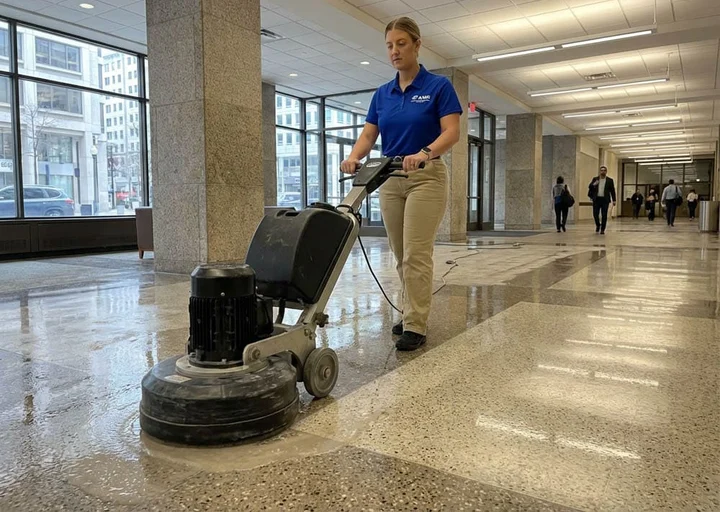
After-hours program
Built around traffic, timing, and priority zones.
AMR operating system
The AMR standard connects scope, people, timing, and visibility.
Premium service is not just the finished look. It is the operating discipline behind the work: trained teams, documented expectations, the right schedule, site visibility, and early communication when something needs attention.
Documented scope
Priority zones, cleaning frequencies, access needs, and facility expectations are written into the plan.
Supervisor checks
AMR keeps the plan visible through quality checks, site follow-up, and issue tracking.
Client communication
Requests, changes, and recurring concerns move through a clear communication path.
Who we serve
Programs built for organizations with a reputation worth protecting.
Independent schools and campuses
Campus-wide standards that hold up on tour day, protect parent perception, and keep multi-building operations ready.
Museums and cultural institutions
Discreet, collection-conscious service for galleries, performing arts centers, and event-driven institutions where donors and visitors notice everything.
Restaurant groups and hotels
Multi-unit consistency for premium restaurant groups and boutique hotel operators — inspections, reviews, and brand standards protected at every location.
Medical office and specialty care
Compliance-sensitive programs with HEPA filtration and UV-C support, built for patient trust and referral-driven practices.
Headquarters and financial institutions
Workplace-experience programs for reputation-sensitive firms where the first 90 seconds of a client visit carry real value.
Property portfolios and multi-site operators
One documented standard, centralized communication, and site-level verification across every property under management.
What clients see change
The cleaning bill is a rounding error. What it protects is not.
Facility condition shows up in contract renewals, employee sick days, and the hours your team spends managing the vendor. These are outcomes from AMR programs across the DC metro.
A government contractor’s facility review was tied to a multimillion-dollar renewal. The reviewer’s first comment was how well-maintained the building looked. The facility team credits the program with helping retain the contract.
A professional services firm’s office manager was spending hours weekly chasing complaints, re-cleans, and no-shows. After switching to AMR, the friction disappeared — and the higher contract price felt "invisible."
A law firm client of nearly ten years saw noticeably fewer sick callouts after AMR took over — a result the office manager took to the managing partner, because billable hours make sick days expensive.
Accountability you can verify
How do you actually know the work got done? With us, you can check.
IoT-backed task and supply tracking
Every AMR program logs cleaning activity at the task level. Clients get dashboard visibility into what was cleaned, when, and by whom — across every location.
Proof of completion, not promises.
Scheduled, scored inspections
Supervisors inspect priority areas against the documented scope, record the result, and route anything that falls short for correction.
Quality is measured against the agreed standard.
One visible path from request to closeout
Service requests are logged, assigned, tracked, and closed through one accountable communication path, with 95% resolved within 24 hours.
Every request has an owner and a status.
“Technology is a force multiplier — it is not a substitute for process.”
Program capabilities
The cleaning services behind a managed facility program.
Recurring Facility Cleaning


Offices
Common areas
Recurring plans
The recurring program for offices, lobbies, shared areas, and occupant-facing spaces where consistency shapes first impressions.
Daily Janitorial Programs


Restrooms
Touchpoints
Daily upkeep
Daily support for restrooms, trash, touchpoints, and shared spaces that need predictable upkeep without constant follow-up.
Floor and Surface Care


Hard floors
Carpet care
Polished look
Planned floor and surface care for high-traffic spaces where appearance, safety, and replacement cost matter.
High-Touch Sanitization


High-touch
Shared spaces
Extra care
Targeted high-touch support for restrooms, shared rooms, wellness-sensitive spaces, and areas that need added attention.
What every plan includes
A cleaning standard leadership can point to.
Every facility has its own traffic, priority areas, tenant expectations, and timing needs. AMR builds the plan around how your building actually operates, then keeps the standard visible.
Service delivery model
From walkthrough to a cleaning rhythm your team can trust.
Find the operational gaps
Identify missed areas, traffic patterns, access needs, timing constraints, and recurring complaints.
Build the documented plan
Turn the walkthrough into priority zones, scopes, frequencies, supervisor expectations, and communication standards.
Assign the team and rhythm
Align staffing, schedule, site access, supplies, and first-week communication before the program goes live.
Keep the standard visible
Inspect priority areas, track recurring issues, and keep expectations from drifting after launch.
Resolve requests quickly
Move client requests through one clear path, with most issues resolved within 24 hours.
Credentials that matter in procurement
The certifications and memberships your vendor review will ask about.
AMR meets the standards professionally managed organizations screen for — before the first walkthrough, not after the first problem.
MBE Certified
OSHA Certified
SBA 8(a) Program Graduate
Green Cleaning Certified
Fully insured cleaning teams
24+ years of continuous operation

Customer experience
What clients say about working with AMR.
Start the conversation
Request a proposal for a facility program built around your standards.
Tell us about your facilities and we will respond within one business day with next steps — a walkthrough, a documented scope, and a program your team can inspect and enforce.