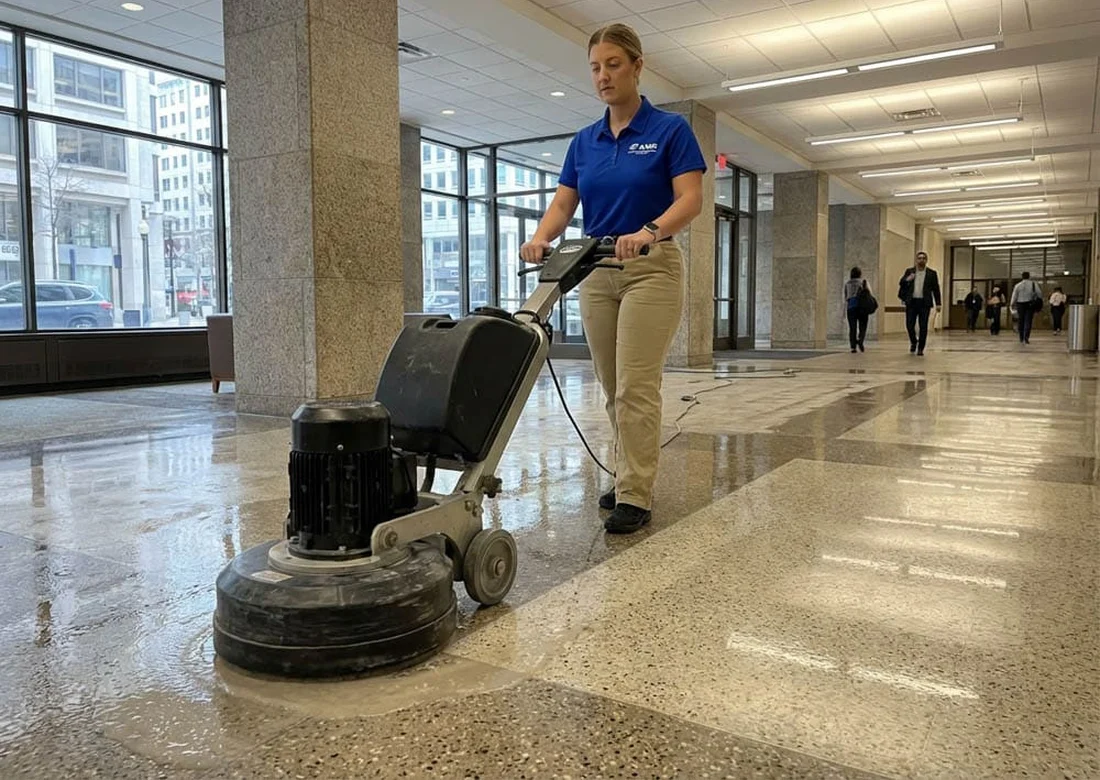
Process leads. Technology supports it.
Digital tools make the standard more visible, but they do not replace supervision, training, or accountability.
 AMR US Commercial Cleaning
The facility services partner for organizations that cannot afford inconsistency.
Request a Proposal
AMR US Commercial Cleaning
The facility services partner for organizations that cannot afford inconsistency.
Request a Proposal
The AMR Operating Process
A successful cleaning transition takes more than assigning people to a building. It takes a validated scope, a facility-specific plan, trained coverage, visible quality control, and fast communication from the first walkthrough forward.
Built to reduce transition risk
A new cleaning provider should make the facility easier to manage, not create another operational fire drill. AMR starts by learning the building, clarifying expectations, and turning the agreed scope into a practical plan for people, equipment, supplies, quality, and communication.
The operating belief behind the process
AMR does not begin with a generic cleaning package. The facility comes first: how people use it, where standards matter most, what has failed before, and what the customer needs to see to trust the result.
Managing more than one building? See how to plan cleaning across your properties, with a scope and transition shaped around each location.
Digital tools make the standard more visible, but they do not replace supervision, training, or accountability.
Documented inspections, corrective actions, and trend data turn quality from an opinion into something the operation can manage.
Cleaning, flooring, finishes, utilities, and capital decisions should work together to protect the building and lower total operating cost.
From walkthrough to launch
Each step has a clear purpose: remove ambiguity before service begins and create accountability once it does.
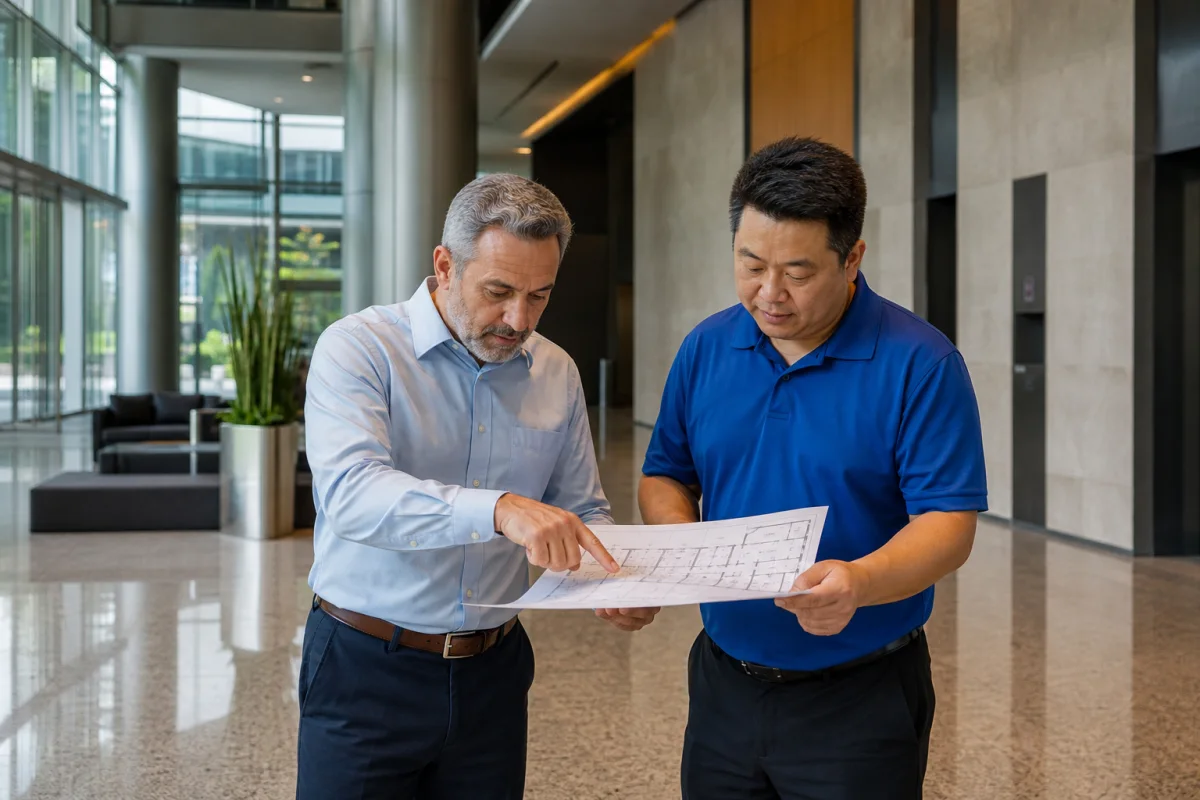 Discovery
Before the proposal
AMR begins onsite to understand your expectations, identify high-priority areas, and validate the cleaning scope against the actual building.
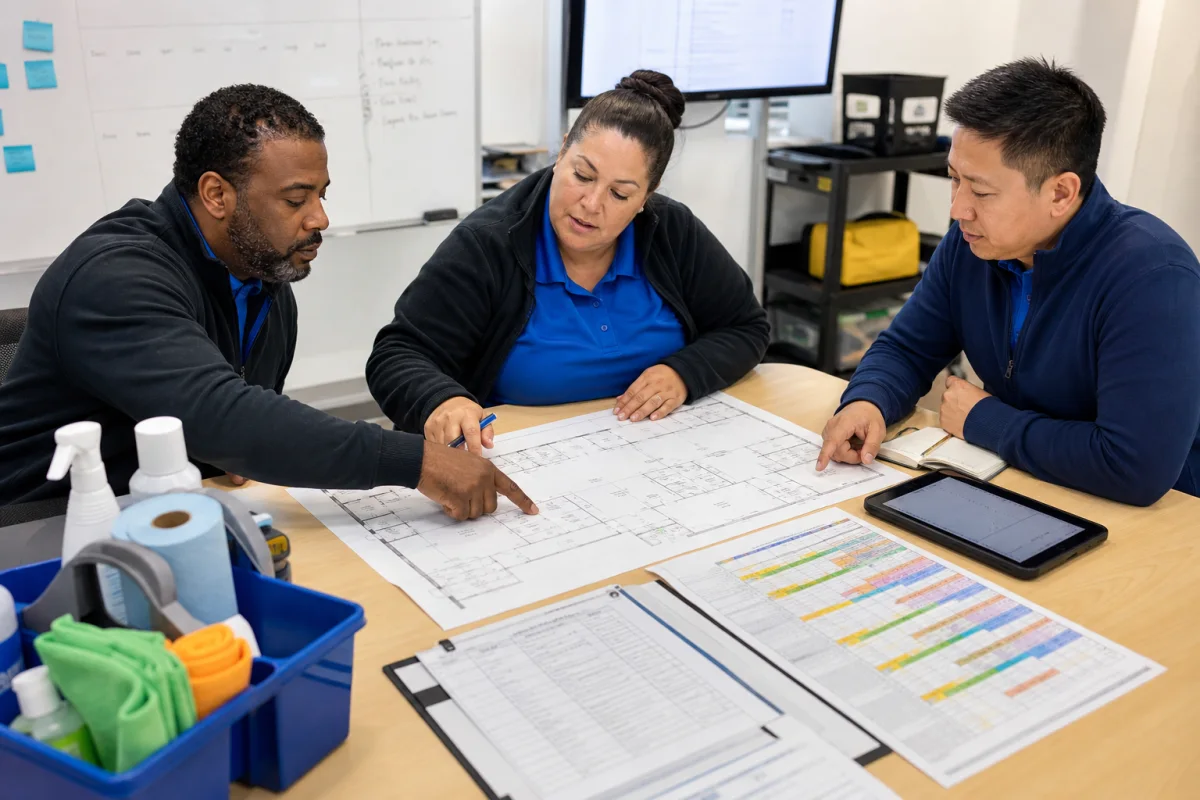 Pre-launch
Plan every moving part
The operations team maps staffing, scheduling, equipment, supplies, quality standards, and communication protocols before the service start date.
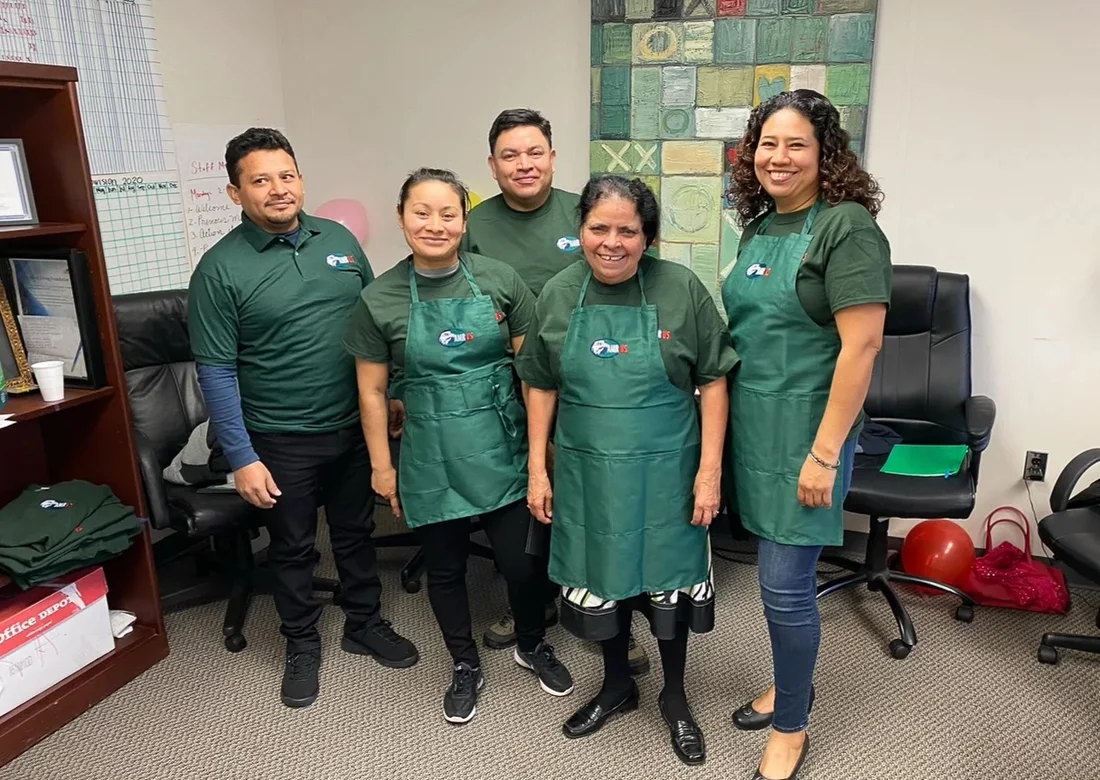 Team ready
People before promises
AMR maintains an active recruiting pipeline. Candidates complete interviews, reference verification when appropriate, background checks, and drug screening.
 Before shift one
Train to the site
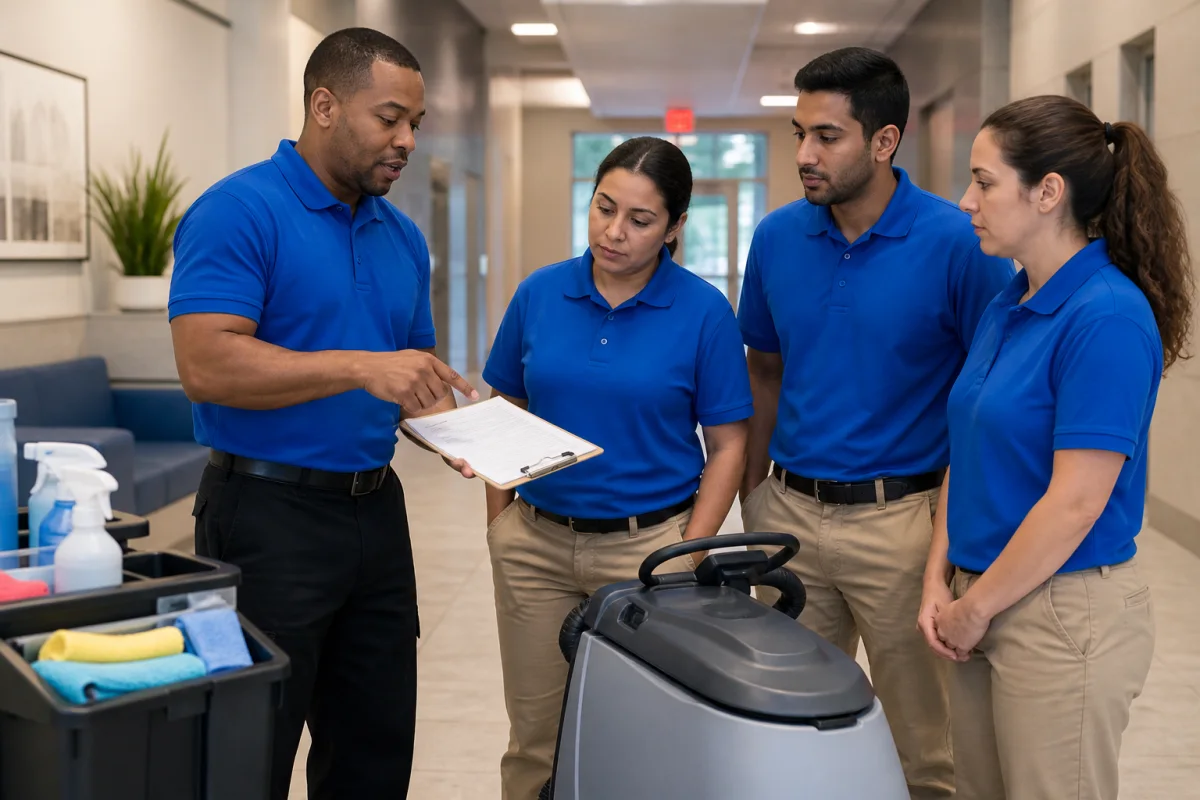
Employees are trained on AMR standards, safety procedures, equipment operation, and customer expectations, with site-specific training where the facility requires it.
 Days 1–30
Launch and stabilize
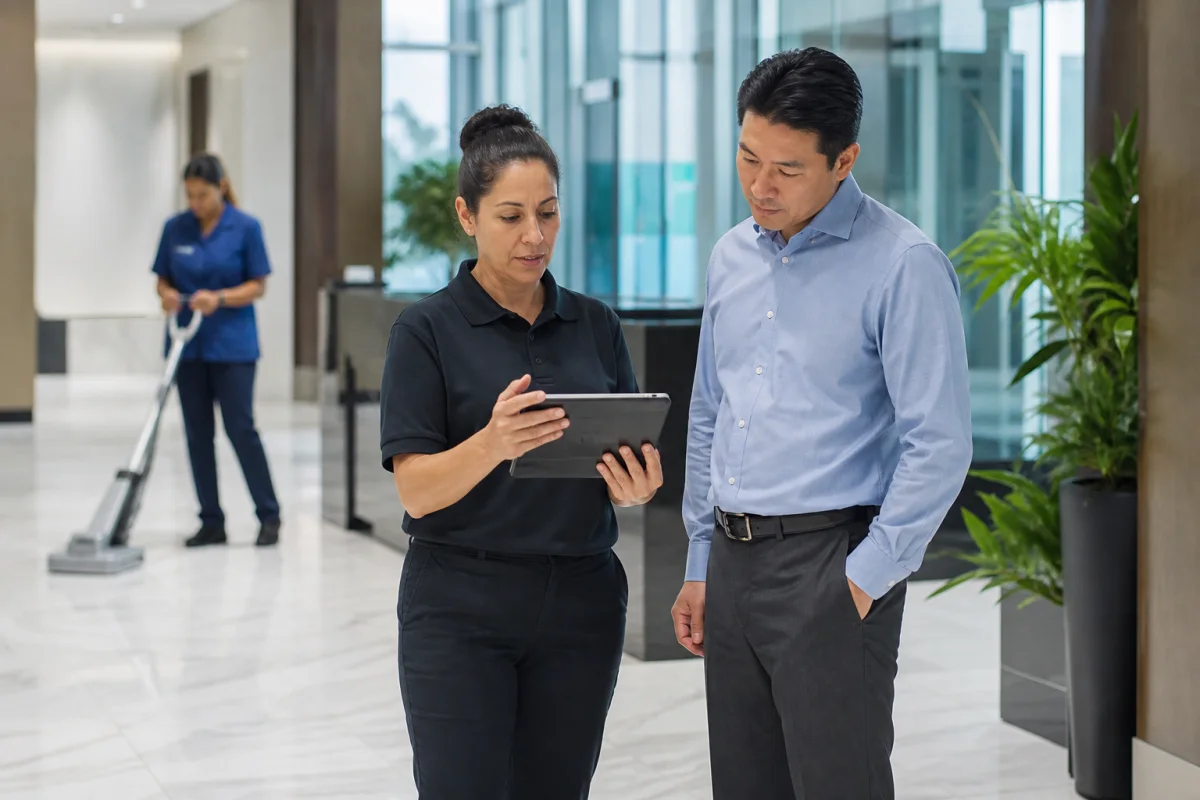
During the first 30 days, supervisors increase inspections and keep a closer communication rhythm with the customer so feedback can become action quickly.
The first 30 days
The opening month is treated as an active transition period. Supervisors inspect more frequently, the customer has a direct feedback loop, and the operating plan is adjusted as the team learns the real rhythm of the facility.
Catch gaps before they become patterns.
Turn customer feedback into action quickly.
Refine scheduling, coaching, supplies, and service details.
Quality control after launch
Scheduled and unannounced reviews use standardized checklists across every account.
Deficiencies are recorded, corrected promptly, and followed by coaching when needed.
Follow-up confirms the correction met the facility's expectation.
Managers review trends over time to prevent repeated problems.
When something needs attention
Every customer concern is acknowledged immediately and assigned to the appropriate supervisor. The team investigates, takes corrective action, communicates progress, and follows up after resolution to confirm expectations have been met.
Callouts and unexpected needs
AMR maintains contingency staffing and cross-trained personnel to minimize interruptions. Supervisors coordinate replacement coverage through the staffing network, and management personnel can step in to support operations until stable coverage is restored.
Technology and reporting
AMR combines field supervision with Mero IoT-backed task and supply tracking so information can move from the facility to operations management without depending on memory or guesswork.
Beyond the cleaning scope
The cleaning program is one part of the facility's total operating cost. AMR also advises customers on decisions that affect maintenance burden, asset life, waste, utilities, and long-term capital planning.
Long-term facility recommendations designed to reduce operating costs and maintenance demands.
Material and finish decisions evaluated by total cost of ownership, not only the lowest upfront price.
Recommendations intended to improve durability, reduce maintenance, and extend asset life.
Programs that improve waste processes, recycling participation, and operating efficiency.
Utility analysis that can uncover billing errors, procurement opportunities, credits, refunds, and cost-saving strategies.
After evaluating a school's proposed VCT replacement, AMR recommended lower-maintenance flooring options. The projected savings were approximately $65,828 annually, or nearly $2 million over a 30-year floor life.
A utility analysis for a 320,000-square-foot K–12 school identified potential savings through electricity procurement optimization and billing improvements.
Examples are based on AMR project analyses. Savings are projections or identified opportunities, not guarantees; actual results depend on facility conditions, implementation, rates, and other factors.
Account recovery
Anonymous client exampleA customer came to AMR after struggling with inconsistent staffing, recurring quality problems, and poor communication from its previous provider.
AMR completed a detailed operational assessment, retrained the onsite team, increased supervisor inspections, and established regular communication with the customer. Within the first month, service consistency improved, complaints were greatly reduced, and the account stabilized.
There was a structured operational process behind the service, not just people showing up to clean.
Customer experience
Request a walkthrough
Tell AMR about your building, current challenges, and service expectations. The next step is an onsite walkthrough to validate the scope and build a plan around the facility.